
Understanding the difference between a torsion spring vs extension springs setup is essential for every homeowner looking to maintain a safe, reliable, and quiet garage door. While both mechanisms counterbalance the heavy weight of your door panels to make opening and closing effortless, they operate using entirely different mechanical principles. Knowing how each system functions will help you make informed maintenance decisions and recognize when it is time to call a professional for torsion spring replacement before a sudden failure leaves your vehicle trapped inside.
In this comprehensive guide, we will break down the mechanics, lifespan, safety profiles, and cost considerations of both spring systems so you can determine which option best fits your property.
How Garage Door Springs Work
A standard residential garage door weighs anywhere from 130 to over 400 pounds. Without a counterbalance system, lifting that weight manually would be nearly impossible, and an automatic opener would burn out within days.
Garage door springs store mechanical energy when the door closes and release that energy to assist in lifting the door when it opens. Although both spring types achieve the same end result, their physical placement and energy-storage methods set them apart.
Key Takeaway: Garage door springs, rather than the electric opener, do 90% of the heavy lifting. Choosing the right spring assembly directly impacts door balance, opener longevity, and household safety.
What Are Torsion Springs?
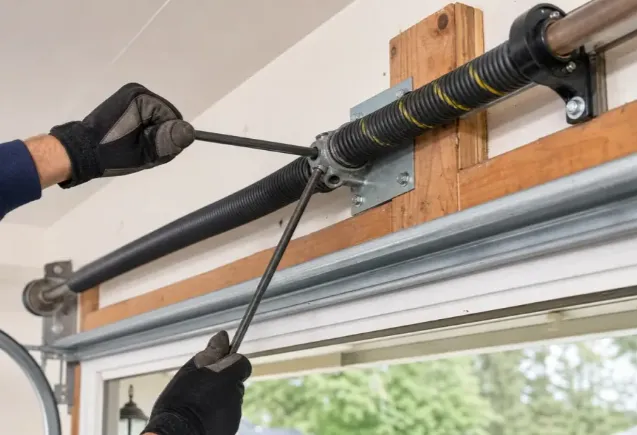
Torsion springs are heavy-duty, tightly wound steel coils mounted horizontally on a metal shaft directly above the garage door opening. Depending on the size and weight of the door, a residential system will typically use either one or two torsion springs.
How Torsion Systems Operate
Instead of stretching outward, torsion springs operate through torque. When the garage door closes, cables attached to the bottom corners wind around drums on the torsion shaft, twisting the spring and storing rotational energy. When you activate the opener, the spring unwinds, transferring that stored torque back through the shaft and drums to lift the door smoothly along its tracks.
Core Advantages of Torsion Springs
-
Superior Durability: Most standard torsion springs are rated for 15,000 to 20,000 cycles (one cycle equals one full open and close), lasting roughly 7 to 12 years under normal daily use.
-
Controlled, Balanced Motion: Because the shaft distributes lifting force evenly across both sides of the door, torsion setups prevent uneven wear on rollers, hinges, and tracks.
-
Enhanced Safety: Because the spring sits securely on a steel shaft, a snapping coil remains contained on the bar rather than flying across the garage.
-
Quieter Operation: Torsion assemblies produce minimal vibration and rattling compared to side-mounted spring designs.
What Are Extension Springs?
Extension springs are long, lightweight coils installed parallel to the horizontal overhead tracks on both sides of the garage door. You will most commonly find them on older residential doors or lightweight, single-car aluminum structures.
How Extension Systems Operate
Extension springs rely on linear tension. As the garage door lowers, the springs stretch and elongate, storing potential energy along their length. When the door opens, the springs contract back to their resting state, pulling on a series of pulleys and lift cables to raise the door panels.
Core Advantages of Extension Springs
-
Lower Upfront Cost: Extension springs are less expensive to manufacture and purchase, making them a budget-friendly choice for basic installations.
-
Minimal Headroom Required: Because they run alongside the upper tracks rather than above the header, extension systems work well in garages with low ceiling clearances.
-
Simple Mechanical Layout: With fewer specialized drums and center bearing plates, extension setups have a straightforward visual footprint.
Torsion Spring vs Extension Springs: Side-by-Side Comparison
When evaluating atorsion spring vs extension springsconfiguration, comparing their performance across critical categories highlights why modern builders overwhelmingly favor one over the other.
Safety, Lifespan, and Long-Term Value
Safety is the single most important factor when comparing garage door hardware. Both spring types hold immense amounts of stored energy, meaning improper handling can result in severe injury.
Why Safety Cables Matter for Extension Springs
When an extension spring reaches the end of its fatigue life and snaps, the recoil can launch sharp metal fragments across the garage at high speeds. Modern building codes require safety containment cables to be threaded directly through the center of every extension spring. If your older door lacks these cables, upgrading immediately is critical.
Long-Term Return on Investment
While extension springs save money on day one, they require replacement nearly twice as often as torsion assemblies. Furthermore, the jerky, uneven lifting motion of aging extension springs places extra strain on your automatic opener’s motor and gear assembly. Investing in a torsion system lowers your total cost of ownership by reducing repair frequency and extending the lifespan of surrounding hardware.
Can You Convert Extension Springs to Torsion Springs?
Yes, upgrading from an extension system to a torsion setup is one of the smartest improvements a homeowner can make. Provided your garage has at least 12 inches of unobstructed headroom above the top of the door, a certified technician can perform a full conversion.
During a conversion process, a technician will typically follow these steps:
-
Disconnect the Opener and Clamp the Door: Securing the door in the down position prevents accidental movement during disassembly.
-
Remove Old Extension Hardware: The technician safely relieves tension and removes the side springs, pulleys, and lift cables.
-
Install the Torsion Assembly: Center and end bearing plates, the steel torsion shaft, cable drums, and calibrated torsion springs are mounted above the header.
-
Wind and Balance the System: Using specialized winding bars, the technician applies precise tension to the springs until the door stays balanced halfway open on its own.
Safety Warning: Never attempt to adjust, wind, or remove garage door springs yourself. High-tension coils require specialized tools and professional calibration to prevent catastrophic injury.
Final Verdict: Which Should You Choose?
If you are installing a new garage door or replacing worn-out hardware, torsion springs are the clear winner for almost every residential application. They deliver superior durability, smoother and quieter movement, and unmatched safety compared to traditional extension coils. Extension springs remain a viable option only when severe headroom constraints prevent mounting a shaft above the door or when maintaining a lightweight, low-use shed door on a strict budget.