
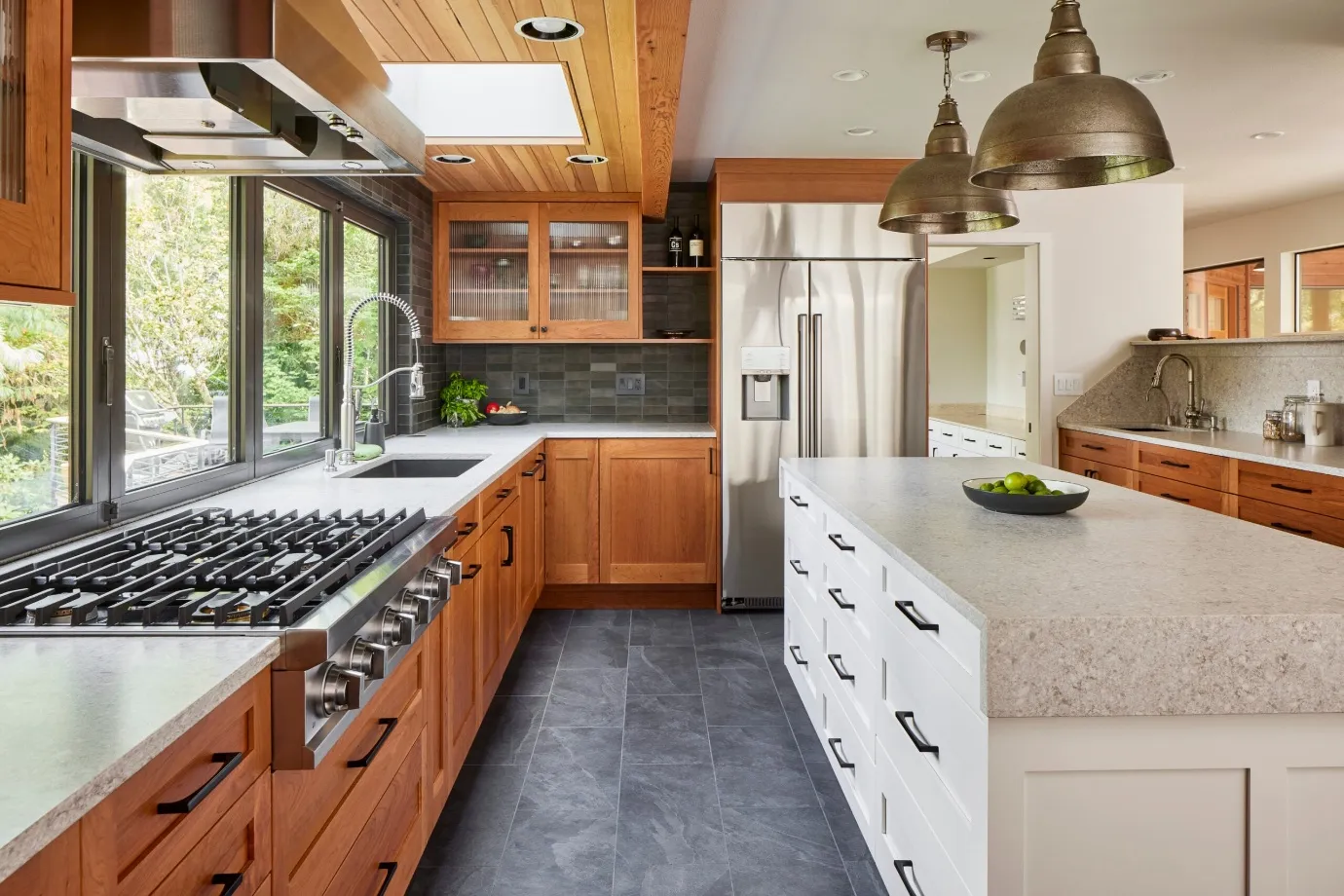
A kitchen remodel succeeds when its surfaces feel like they belong together. Floors and counters make up most of what you see and touch, so the choices you make there shape the entire room. Many Atlanta homeowners begin with hardwood flooring installation, because warm wood sets the tone for everything that follows. From there, the countertop, cabinet color, and lighting can be selected to complement it. This article lays out a practical, step-by-step way to plan both surfaces without second-guessing.
Start With the Floor Plan and Traffic Flow
Before choosing finishes, study how your household moves through the kitchen. Where do people gather, where do the dishes pile up, and which path sees the most footsteps? Hardwood in high-traffic zones needs a durable finish, while counters near the sink face the most moisture. Mapping these patterns early prevents expensive regrets later. It also helps you decide whether the wood should flow continuously into neighboring rooms, which tends to make a kitchen feel noticeably larger, brighter, and more open.
Choosing Wood Species and Grain
Species affects hardness, color, and how the floor ages over time. Oak is a dependable favorite, with a pronounced grain that hides everyday wear. Maple offers a smoother, more uniform look, while hickory brings dramatic variation and exceptional toughness. Walnut delivers rich, dark tones but shows scratches more easily. Consider your pets, children, and cooking habits honestly before falling in love with a sample. The best species is the one that matches your lifestyle as well as your design taste.
Countertop Materials Worth Considering
Counters take the heaviest daily abuse, which is why custom countertops deserve as much planning as the floor. Fabricating to your exact layout reduces awkward seams, accommodates unusual corners, and lets you choose edge profiles that suit your style. Different materials, from quartz to granite, offer distinct strengths for heat, stains, scratches, and everyday cleaning. A made-to-measure fit also ensures that sinks, cooktops, and islands sit exactly where your workflow needs them, rather than where a standard slab happens to allow.
Matching Tone and Undertone
Color harmony is subtler than picking two shades you like. Wood carries warm yellow, red, or golden undertones, and countertops lean warm, cool, or neutral. When the undertones clash, the kitchen feels slightly off even if nobody can explain why. Hold large samples side by side in your actual lighting, morning and evening. Trust your eyes over catalog photos. A quiet, softly veined counter often lets rich wood take center stage, while a bold pattern works best against a calmer floor.
Sequencing the Work So Nothing Gets Damaged
The order of work protects your investment. Demolition and cabinet installation come first, then countertop templating, which requires cabinets to be fully set and level. Hardwood is typically installed and finished with care, so heavy equipment and dust do not harm it, and many pros coordinate the final fitting of counters around that schedule. Share your timeline with every trade involved. A clear sequence prevents scratched planks, delayed fabrication, and the frustrating, avoidable rework that so often comes from surprises.
Budgeting Across Both Surfaces
Treat the two surfaces as one budget rather than separate shopping trips. Floors and counters often account for a large share of remodel spending, so a splurge on one can be balanced by a smart choice on the other. Perhaps you choose a premium wood and a more modest counter, or the reverse. Request itemized estimates that include removal, prep, materials, and finishing. Transparent numbers make comparisons fair and keep the project from drifting beyond what you planned to spend.
Caring for Wood and Stone Day to Day
Beautiful surfaces stay beautiful with simple habits. Wipe spills from wood promptly, use felt pads under chairs, and place mats at the sink and stove where water and grease collect. For counters, use cutting boards and trivets, and clean with gentle, non-abrasive products suited to the material. Seasonal humidity swings in the South can make wood expand slightly, so steady indoor conditions help. Small habits compound into lasting results. A few minutes of routine care protects both surfaces for many years.
Conclusion
A cohesive kitchen comes from decisions made in the right order, with floors and counters chosen as a pair. Start with how your household lives, match undertones in real light, and sequence the work so nothing gets damaged. When you are ready to turn these ideas into an installed result, visit faustflooring.com to explore services and start a conversation about your Atlanta home. Take your time, ask questions, and compare options. Thoughtful planning today means a kitchen you enjoy using every single morning.