
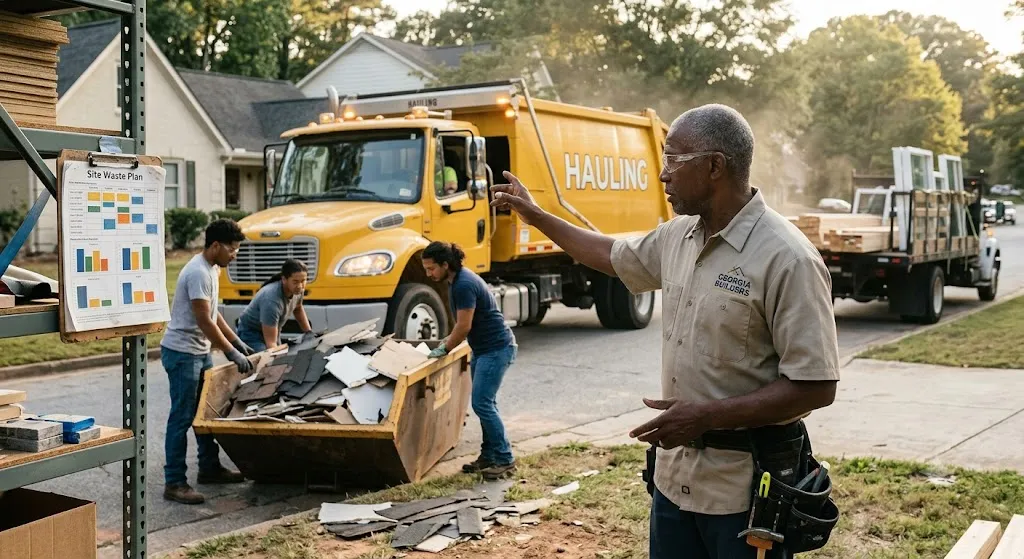
Ask any foreman what slows a project down, and the answer often isn’t weather or permits. It’s the pile of scrap growing beside the garage door that nobody has time to deal with.
Waste feels like a side issue until it blocks a doorway. By then it has already cost you hours and a few sharp words from the client.
How Leftover Material Eats Into Your Schedule
Every sheet of cut drywall and bundle of old trim needs somewhere to go. When it has no place, workers step around it, trip over it, and spend part of each afternoon shifting it from one corner to another.
That shuffling adds up. A tidy site is a faster site, and clients notice the difference the moment they walk in.
Plan the Pickup Before Demolition Starts
Waste is easiest to manage when it’s scheduled, not reacted to. Before the first wall comes down, decide where material will be stacked, who moves it, and when a crew or bin shows up.
Put that date on the same calendar as the plumber and the electrician. Treated like any other trade, it rarely gets forgotten.
Debris and Junk Are Not the Same Thing
Debris is what the job itself produces: lumber offcuts, broken tile, torn-out cabinets, drywall, and concrete chunks. Junk is what was already sitting in the space, like abandoned furniture, old fixtures, and boxes left by the last tenant.
The distinction matters because the two get handled differently. Heavy, mixed debris often needs its own plan, while loose junk is usually quicker to clear with a standard haul.
Where Construction Debris Removal Fits
Many crews rent a dumpster and call it done, yet permits, placement rules, and weight limits vary by city. Bulky material can also fill a bin faster than expected, and then you’re waiting on a swap. In those cases, construction debris removal by a hauling crew can keep the work moving without taking over a driveway.
It tends to suit smaller renovations, bathroom gut jobs, and cleanup at the tail end of a project. Ask whether the crew loads everything by hand, since that saves your own labor for the actual building. Also find out how quickly they can return if the project runs long, because schedules slip more often than anyone admits.
Sorting Saves Money and Headaches
Separate clean wood, metal, and concrete from mixed trash. Disposal sites often treat clean loads more kindly than mixed ones, and scrap metal may even earn a little back.
Use labeled bins or tarps, and take ten minutes at the end of each day to sort. That small habit keeps piles from merging into one giant heap nobody wants to touch.
Offices, Shops, and Warehouses Have Waste Too
Contractors aren’t the only ones dealing with clutter. A retail shop closing its doors, an office replacing desks, or a landlord turning over a vacant unit can all face rooms full of old furniture and equipment.
For those jobs, commercial junk removal is worth a look. It’s built around larger loads, tighter schedules, and working after hours so the business can keep running. Timing is the sticking point there, since nobody wants a truck blocking the loading dock at lunch rush, so agree on a window that suits the staff.
Questions Worth Asking Before You Book
A few quick questions prevent most headaches. Is the crew insured? Is pricing based on volume or on a flat quote? Will they sweep up after loading? What happens to items that can be donated or recycled?
Get the answers in writing. If a company is vague on any of them, that’s useful information in itself, and you can move on to the next name on your list.
Keeping Crews Safe and the Site Tidy
Clear walkways every day, not only on Friday. Stack heavy material low, cover sharp offcuts, and keep nails and screws out of foot traffic. Wear gloves and eye protection around broken glass or insulation, and keep a first-aid kit where everyone can find it. A five-minute cleanup at closing time beats an hour of searching for a dropped tool the next morning.
Make one person responsible for waste on each job. When everybody owns the mess, nobody does.
Conclusion
Good projects finish with the debris gone, not just the paint dry. Plan for waste early, separate junk from job debris, and bring in help when the volume gets out of hand. If you need a hauler with local crews and quick scheduling, take a look at junkzip.com and request an estimate before the pile grows.