
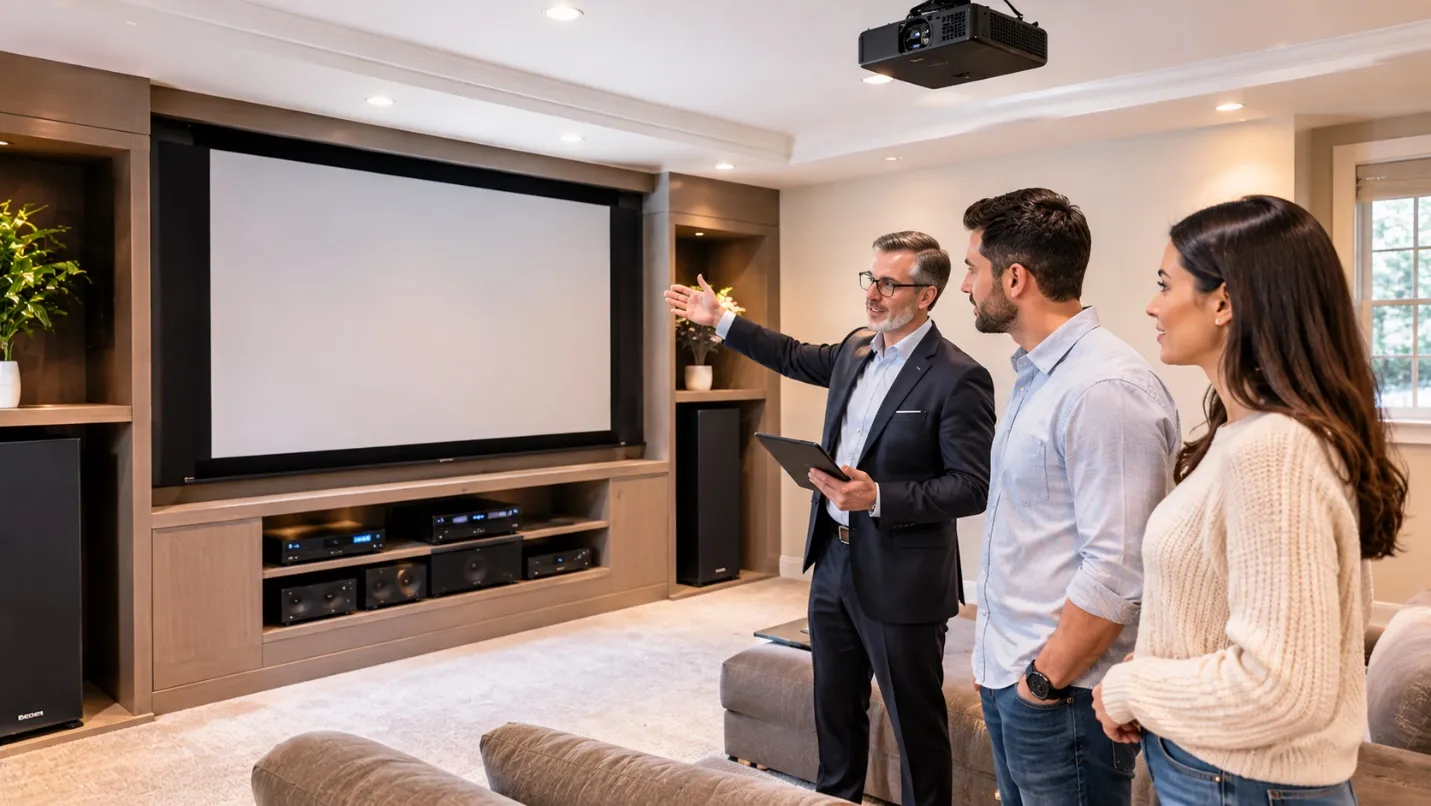
A dedicated entertainment room can seem like a valuable bonus when buying a house. Built-in speakers, a large screen, and concealed equipment may suggest that movie nights are already arranged. Yet an impressive installation can hide outdated components, missing accessories, or controls that no longer work properly. Before assigning extra value to the room, buyers should establish exactly what is included in the sale, whether the equipment functions reliably, and what future maintenance might cost.
Ask Exactly What the Seller Is Leaving
A wall-mounted television does not necessarily come with the house, and the same uncertainty can apply to receivers, speakers, movie players, and remotes. Request a written inventory specifying which devices and accessories are included. Distinguish permanently installed wiring from removable electronics before discussing the property’s entertainment features as part of its value.
Request model numbers and photographs of equipment labels. A theater can contain older devices with different capabilities despite its polished appearance. Without an inventory, buyers may discover valuable components missing on move-in day.
Check Playback Equipment and Account Ownership
A seller may demonstrate a movie library, but digital purchases do not necessarily transfer with the property. Accounts and licenses may belong to the previous owner. Verify whether any content can legally transfer instead of accepting a verbal promise.
For instance, a Kaleidescape Strato E offers standalone 4K movie playback with built-in storage, but the buyer still needs to understand account registration and movie-store requirements. Purchasing a home that contains the hardware does not automatically mean inheriting the seller’s purchased movie collection.
Look Behind Cabinets and Screens
The visible display tells only part of the story. Inspect the equipment rack, cables, power connections, and ventilation. Crowded cabinets make servicing difficult, while unidentified cables complicate changes. Check existing mounting locations for suitability.
When evaluating a home theater systems setup, consider whether the room offers access for future repairs and replacement devices. A tidy installation should be safe and maintainable, not merely free of visible wires. If electrical or structural conditions raise concerns, seek an assessment from an appropriately qualified professional.
Test the System Like an Everyday User
Ask the seller to demonstrate more than a movie clip. Start from an off state, select a source, adjust volume, and switch inputs. Note errors, delays, or controls that require specialist knowledge.
Confirm that the main seating positions offer clear dialogue and reasonable picture visibility. Test at ordinary listening levels and under lighting conditions you expect to use. A short walkthrough cannot guarantee future reliability, but it can expose obvious problems before the transaction is completed.
Review Internet and Control Dependencies
Some entertainment components communicate over a wired local network; others rely on wireless access or online services. Ask whether the current router, network switch, control processor, or subscription is included in the sale. If the seller removes supporting equipment, an otherwise functioning theater may lose important features.
Find out how devices are administered and whether ownership can be transferred through supported processes. Never request the seller’s passwords as a substitute for legitimate account transfer. Instead, arrange factory resets or authorized handover steps where appropriate, with settings documented by an installer.
Estimate the Cost of Necessary Updates
An attractive theater can still need a new display, receiver, control interface, or network improvements. Build a realistic estimate before assigning extra value to the installation. Identify repairs that are essential for operation and upgrades that would simply improve convenience or performance.
If the seller cannot provide documentation, consider budgeting for a professional inspection. That expense may be worthwhile when equipment is concealed or highly integrated. Buyers should also check warranties and service agreements rather than assuming coverage continues automatically after the property changes hands.
Organize a Practical Handover
Before closing, request manuals, model numbers, and the original installer’s contact details if available. Ask which functions require internet access and which can operate locally during outages.
After moving in, document the setup, secure network access, and test each device systematically. Arrange any necessary account changes directly with manufacturers or service providers. Keeping an accurate equipment record will make troubleshooting and future upgrades much easier.
Conclusion
A built-in theater should be evaluated as a functioning collection of equipment, connections, and services, not as an attractive feature in real estate photographs. A clear inventory, practical demonstration, and realistic repair budget help buyers understand what they are receiving. Epic Systems can be one source of professional guidance for entertainment equipment and integration, but the decisive questions belong in the property review itself. Knowing what works, what transfers, and what needs attention turns an impressive room into a genuinely useful part of the new home.