
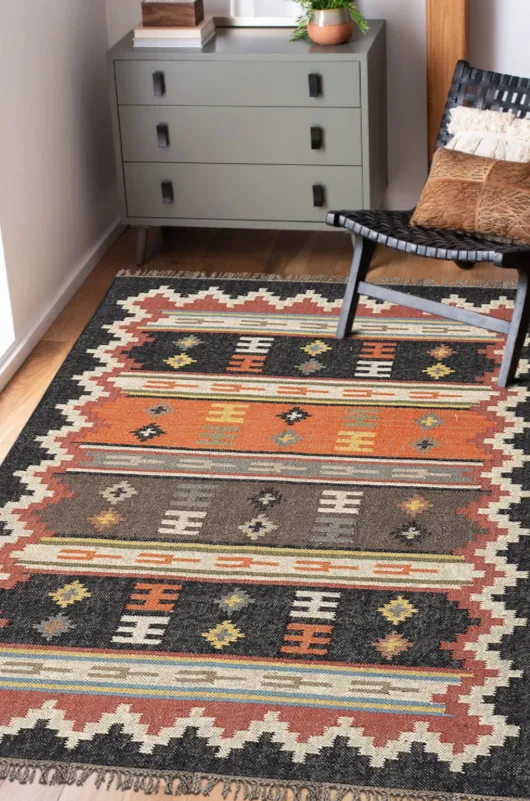
A bedroom handmade rug is not simply a decorative layer placed beside a bed. It influences how the room feels underfoot, how furniture connects visually, and how comfortable the space becomes. Unlike designer rugs in social areas, bedroom rugs interact with people during the most personal moments of the day.
In Indian homes, where marble, vitrified tiles and stone flooring are common, a bedroom rug also plays a practical role. It introduces warmth, texture and softness while balancing the hardness of the floor beneath it. However, choosing the right rug requires more than selecting an attractive pattern.
Size, placement, fibre, construction and maintenance expectations decide whether a rug truly works inside a bedroom. Understanding these technical elements helps homeowners choose bedroom rugs that feel natural within their space instead of simply filling an empty area.
Why Is Bedroom Rug Selection More About Human Comfort Than Floor Decoration?
Bedroom rugs are experienced through touch before they are appreciated visually. The surface beneath your feet, the texture of the fibre and the warmth it provides influence everyday comfort more than most decor elements. Unlike wall art home decor or furniture, a bedroom rug has direct physical interaction with the user.
Important comfort factors include:
- Underfoot softness: Fibre type and pile structure determine whether a rug feels plush, firm or lightweight.
- Thermal comfort: Rugs provide insulation against cold flooring materials like marble and stone, which can feel cooler during mornings and winters.
- Texture experience: Natural fibres such as wool, cotton and silk create different tactile sensations because of their individual fibre structures.
- Noise control: Textile surfaces absorb some sound reflection from hard floors, creating a softer acoustic environment.
The best bedroom rug choices consider how the room is experienced, not only how it appears in photographs.
How Does Rug Size Affect Bedroom Proportion And Furniture Balance?
Rug sizing is one of the most important decisions because it determines the relationship between the bed, surrounding furniture and available floor space. A common mistake is selecting a rug based only on the empty area visible around the bed. Instead, the area rug should be planned around the furniture arrangement.
Consider these factors:
|
Bedroom Layout |
Rug Planning Approach |
|
Large master bedroom |
Use a larger rug that extends beyond the bed to create a connected furniture zone |
|
Medium bedroom |
Choose a size that supports the bed area while maintaining walking space |
|
Compact bedroom |
Consider runners or partial placements to add comfort without overcrowding |
A well-sized bedroom rug should provide enough visual connection around the bed while allowing natural movement around the room. The objective is balance, not maximum floor coverage.
What Rug Placement Rules Do Interior Designers Follow For Bedrooms?
Professional rug placement focuses on creating visual structure and maintaining comfortable movement paths.
The most common approaches include:
Full Bed Placement
The rug extends underneath most of the bed and surrounding area.
Works well for:
- Spacious master bedrooms
- Large furniture layouts
- Rooms where the rug acts as a foundation layer
Side Runner Placement
Separate runners are placed beside the bed.
Works well for:
- Smaller bedrooms
- Minimal layouts
- Homes where flexibility is important
Foot Of Bed Placement
A rug is positioned near the lower section of the bed.
Works well for:
- Adding texture without covering large areas
- Highlighting a seating bench or open space
The right placement depends on room dimensions, furniture arrangement and how the bedroom is used daily.
How Does Rug Construction Influence Bedroom Comfort And Longevity?
The appearance of a rug is only one part of its value. Construction determines texture, durability and how the rug behaves over time.
Different handmade techniques create different characteristics:
- Hand-knotted rugs: Individual knots are tied by artisans to create a dense and detailed structure. These rugs are often appreciated for their craftsmanship, durability and ability to retain character over years.
- Hand-tufted rugs: Yarn is inserted into a fabric base using a specialised technique, allowing detailed designs with a different construction method. They offer flexibility in patterns and textures.
- Handwoven rugs: Threads are interlocked through traditional weaving techniques, creating a flatter structure that works well in contemporary and relaxed bedroom settings.
- Chain stitch embroidered rugs: Artisans create designs through looped embroidery stitches, producing detailed surface patterns with a handcrafted appearance.
Construction affects:
- The way a rug feels beneath your feet. Construction technique determines the surface character, from the dense cushioning of hand-knotted rugs to the flatter, structured feel of handwoven designs.
- How easily the rug fits into everyday living. The weaving method, fibre arrangement and surface structure influence cleaning needs, dust retention and maintenance routines.
- How the rug responds to years of use. Quality construction affects shape retention, resilience against foot traffic and how the fibres recover over time.
- The depth and character visible in every detail. Craftsmanship techniques create variations in texture, pattern definition and surface richness that cannot be understood from colour alone.
- The relationship between craftsmanship and longevity. A well-constructed rug carries the strength of its making process, allowing materials and artisan techniques to remain valuable beyond changing décor preferences.
The pattern may attract attention first, but construction determines the rug’s everyday experience.
Which Rug Materials Perform Best In Indian Bedrooms?
The ideal rug material depends on climate, lifestyle and maintenance expectations. Every fibre offers different benefits and limitations.
|
Material |
Characteristics |
Suitable For |
|
Wool |
Resilient, naturally comfortable and durable |
Frequently used bedrooms |
|
Cotton |
Lightweight and easy to maintain |
Casual bedrooms |
|
Silk |
Fine texture and detailed appearance |
Decorative spaces |
|
Jute |
Natural texture and structured feel |
Earth-inspired interiors |
For Indian bedrooms, consider:
- Sunlight exposure near windows or balconies. Direct light can affect colour retention and fibre performance over time.
- Dust accumulation patterns. Choose materials and pile heights that suit the dust levels and cleaning needs of your home.
- Cleaning routine. Select a rug that matches how frequently you can maintain and care for it.
- Humidity levels. Consider how the room’s moisture conditions interact with different fibres and constructions.
- Daily movement around the bed. Areas near bedside spaces need rugs that balance comfort with durability.
A material should be selected based on real living conditions, not only visual appeal.
Summing Up..
The quality of a bedroom is often measured by what you notice, but its comfort is defined by what you don’t. A handmade rug that feels proportionate, sits exactly where movement begins. And it is crafted for the realities of everyday living while improving the space without demanding attention.
That is the difference between decorating a bedroom and designing one.